Take off

Sail across the wind and pick up speed – the faster, the more stable the ride. When reaching the ‘right’ pace a small kick with your rear foot will pop the board onto the foil. This move is very similar to a chop hop.
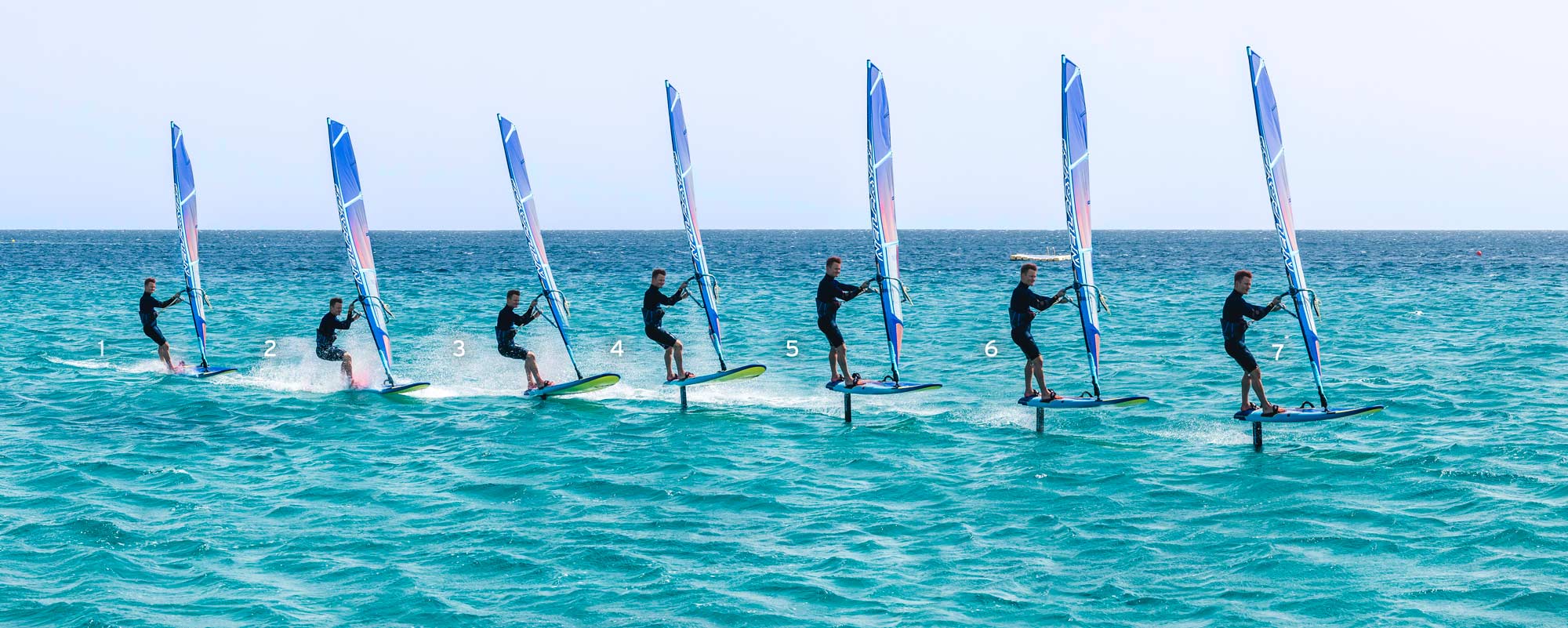
Shift your weight towards the rear foot to generate more lift.

Once your board is clear off the water surface, start leaning forward again to reduce the lift and obtain the ‘right’ height. A comfortable and balanced stance will ensure a stable and steady ride on the foil.

TIP: Going too slow is a very common mistake for first-time foiling. Speed is necessary for the stability of the foil and going faster will lift your board off the water automatically. If the foil is stalling and the nose of the board is pointing up, it is a sign that you are trying to fly at too little speed.
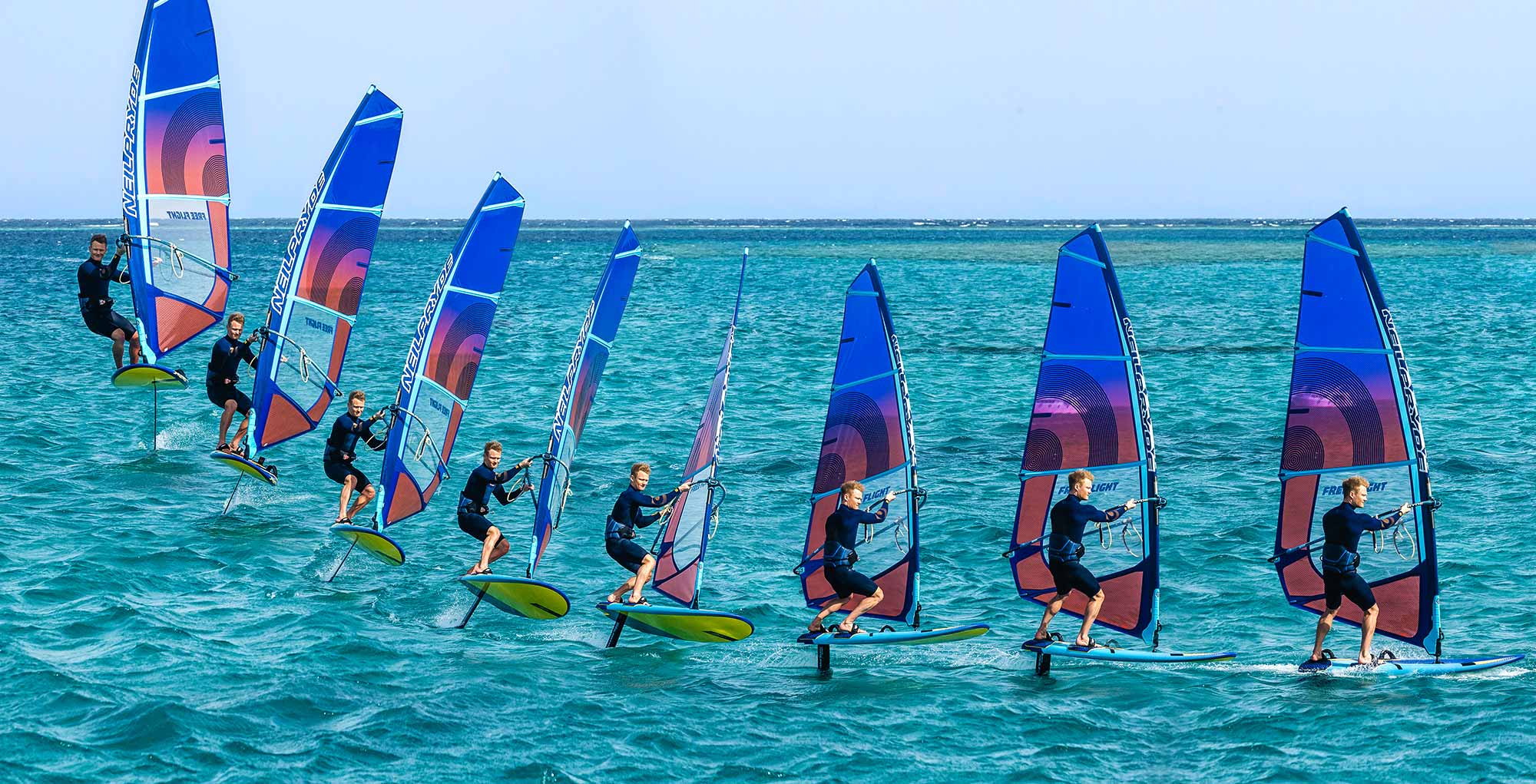
How to prevent wheelies: Everybody had the sensation of a foil that starts lifting and you are almost getting too high. The reason for this is usually too much foil lift and the rider leaning to the rear. In case the foil now would break through the surface, a crash is inevitable.

Contrary to common instinct, bearing off is the only solution! Get your weight forward and over the board, cave off the wind quickly while you sheet in the sail.

When the board turns downwind it will accelerate but at the same time, the nose lowers because the sail creates downforce. The pressure from the foil will reduce and you can regain control. This is also a way to touch down and land the board safely.

Baue auf Halbwindkurs genug Speed auf, um eine möglichst stabile Fahrt zu gewährleisten. Ist die richtige Startgeschwindigkeit erreicht, hilft ein kleiner Kick mit dem hinteren Fuß, ähnlich wie beim normalen Chop- Hop, dem Foil zum Lift zu verhelfen.


Zusätzlich das Gewicht auf den hinteren Fuß verlagern, um weiter Auftrieb zu erzeugen.

Sobald das Board deutlich aus dem Wasser abgehoben hat, das Gewicht wieder langsam auf den vorderen Fuß verlagern, um den Lift zu stoppen und die richtige Reiseflughöhe zu halten. Entspannte und ausgeglichene Position einnehmen, um einen möglichst stabilen Flug einzuhalten

TIPP: Ein gängiger Fehler am Anfang ist eine zu geringe Geschwindigkeit. Diese wird für eine gewisse Grundstabilität des Foils benötigt. Blockiert das Foil und zeigt die Nose nach oben ist das ein Zeichen für einen Flugversuch mit zu geringer Geschwindigkeit.


Landungen kontrolliert vollführen: Jeder Foil Einstieger kennt diese Situation: In voller Foil-Fahrt steigt das Board, das Foil kommt der Wasseroberfläche immer näher. Wenn das Foil jetzt die Oberfläche durchbricht, ist der Absturz unvermeidbar.

Entgegen dem gewohnten Instinkt hilft nur deutliches Abfallen. Ursache liegt zu­meist in einer zu starken Rücklage und der dadurch resultierenden hohen Belastung auf das Heck.

Durch das Abfallen wird das Board zwar beschleunigt, aber die Nose senkt sich gleichzeitig ab und du bekommst wieder Kontrolle über das Board. Zur Unter­stützung die Segelhand dichtholen, um den Druck auf den Mastfuß zu erhöhen, was das Board ebenfalls nach unten drückt. Dabei immer versuchen, das Gewicht auf das vordere Bein zu bringen, um zusätzliche Abwärtskraft auf das Foil auszuüben.